
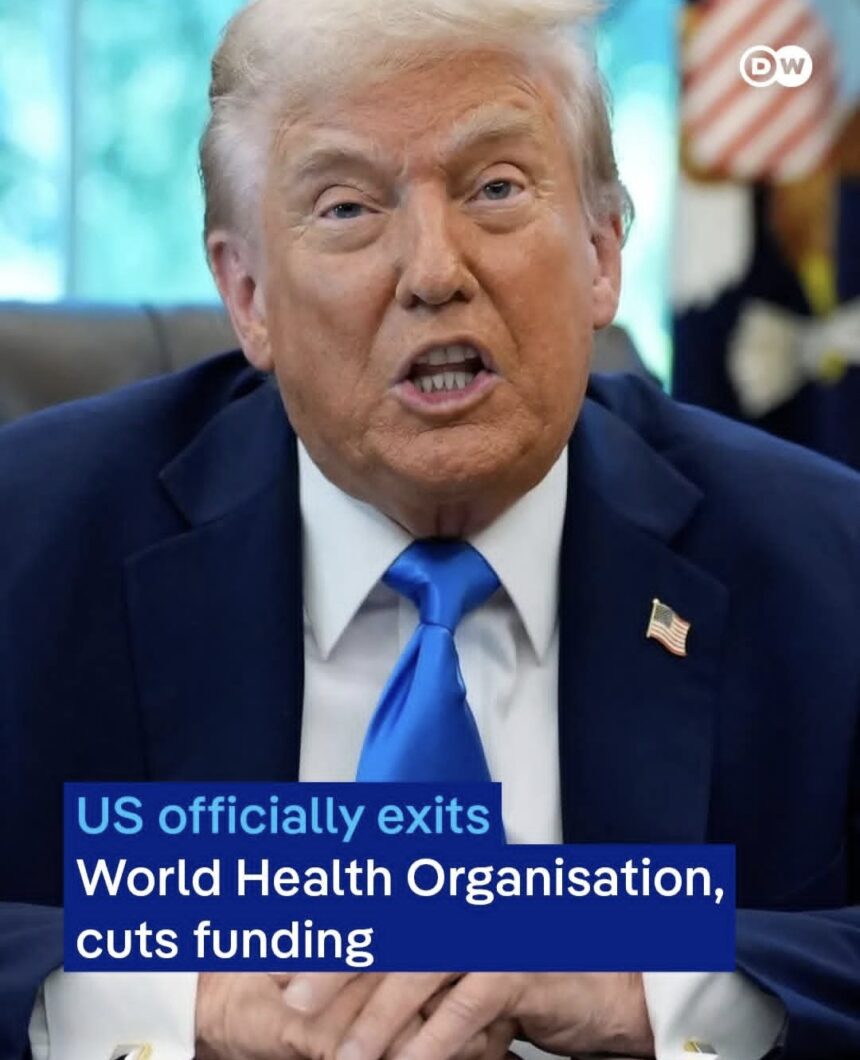
The United States is formally withdrawing from the World Health Organization today, ending its financial support and leaving about $260 million in unpaid dues, according to reports. The move, ordered by President Donald Trump in 2025, has triggered a budget crisis at the WHO and drawn warnings that it could weaken global health security. The US has been the WHO’s largest donor, providing about 18% of its funding, but Trump ordered the exit in 2025, accusing the WHO of mismanaging health information and failing during past global health crises. Legal experts say the move may violate US law, which requires a one-year notice period and full payment of outstanding contributions, DW Africa reports.
Meanwhile, It is believed that the U.S. withdrawal from the World Health Organization (WHO) weakens global health coordination, reduces funding for critical programs, and isolates the U.S. from international disease surveillance and response efforts.
Global Consequences
- Loss of Funding: The U.S. was historically the largest contributor to WHO. Its exit creates a major funding gap, threatening programs on polio eradication, vaccine distribution, and emergency response to outbreaks.
- Weakened Global Health Security: WHO relies on member states for coordinated responses to pandemics. Without U.S. participation, international collaboration on infectious disease surveillance and preparedness is undermined.
- Reduced Influence: The U.S. loses its seat at the table in shaping global health policy, ceding influence to other nations like China and the EU.
🇺🇸 Domestic Consequences
- CDC Isolation: The Centers for Disease Control and Prevention (CDC) can no longer directly collaborate with WHO, limiting access to real-time global health data and weakening U.S. preparedness for emerging threats.
- Slower Response to Outbreaks: Without WHO’s early-warning systems, the U.S. risks delayed detection of new diseases, increasing vulnerability to pandemics.
- Economic Costs: Health crises often have ripple effects on trade, travel, and supply chains. Reduced coordination raises the risk of larger economic shocks.
⚖️ Political & Strategic Consequences
- Geopolitical Shift: Withdrawal signals retreat from multilateralism, potentially damaging U.S. credibility and leadership in global health diplomacy.
- Reform vs. Retreat Debate: Supporters argue WHO failed during COVID-19 and needed reform; critics say leaving forfeits leverage to push for accountability.