
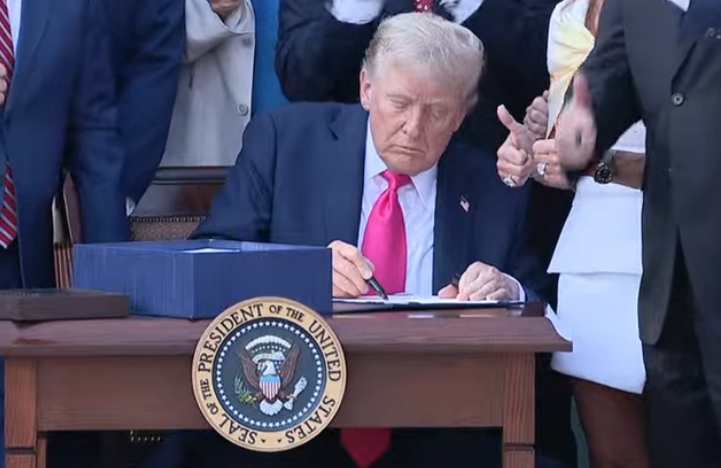
President Donald Trump signed an executive order Thursday that could reclassify marijuana as a less dangerous drug and open new avenues for medical research, a major shift in federal drug policy that inches closer to what many states have done.
The switch would move marijuana away from its current classification as a Schedule I drug, alongside heroin and LSD. Cannabis would instead be a Schedule III substance, like ketamine and some anabolic steroids.
Reclassification by the Drug Enforcement Administration would not make it legal for recreational use by adults nationwide, but it could change how the drug is regulated and reduce a hefty tax burden on the cannabis industry.
Related Stories

The Republican president said he had received a deluge of phone calls supporting the move and its potential to help patients. “We have people begging for me to do this. People that are in great pain,” he said.
Similarly, the Justice Department under Trump’s Democratic predecessor, Joe Biden, proposed reclassifying marijuana to a Schedule III substance. Unlike Biden, Trump did not have open encouragement from across his party for the move. Some Republicans have spoken out in opposition to any changes and urged Trump to maintain current standards.
Such a switch typically requires an arduous process, including a public comment period that has drawn tens of thousands of reactions from across the U.S. The DEA was still in the review process when Trump took office in January. Trump’s order is expected to speed the process along, though it was not immediately clear how long it might take.
Many states have legalized the recreational use of marijuana for adults or allow it for medical purposes. But U.S. laws have remained stricter, potentially leaving people subject to federal prosecution.
Polling from Gallup shows more Americans back a less restrictive approach: Support for marijuana legalization has grown significantly, from just 36% support in 2005 to 68% last year.
Source: AP