
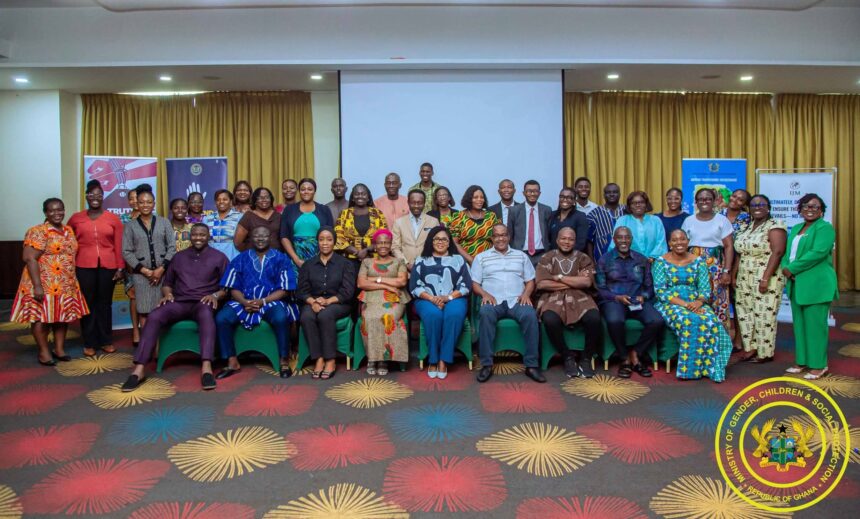
The second and final day of the two-day ‘Strategic Training Workshop on Human Trafficking and its Gendered Related Issues’ concluded with a renewed call for strengthened collaboration, proactive enforcement and sustained commitment to combating the menace in Ghana.
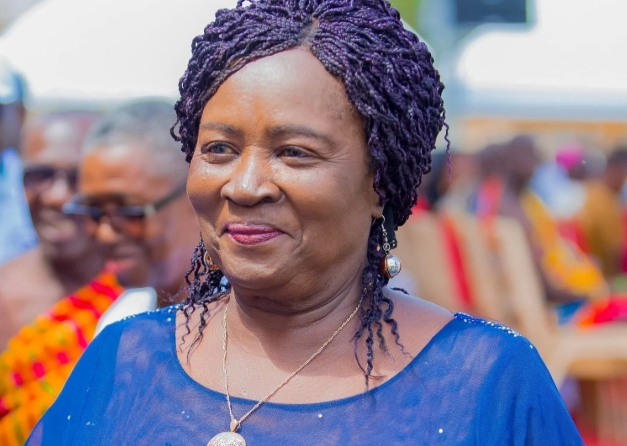
The Minister for Gender, Children and Social Protection, Hon. Dr. Agnes Naa Momo Lartey, in her remarks, emphasized that addressing human trafficking requires collective and coordinated effort across institutions and sectors. She reiterated that no single entity can effectively tackle the issue in isolation, stressing the need for strengthened partnerships, continuous engagement, and shared responsibility to protect vulnerable populations.
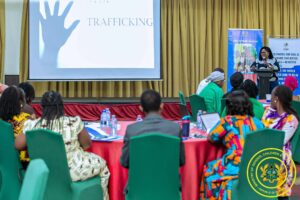

 Strategic Training Workshop on Human Trafficking and its Gendered Related Issues in Accra
The Minister also extended a heartfelt condolences to the victims and families affected by the recent boat tragedy, noting with concern the disproportionate impact on women and children. She assured that the Ministry stands in solidarity with the affected families and will explore ways to support them through this difficult period, while urging stakeholders to draw lessons from such incidents to prevent future occurrences.
Delivering her welcome address, the Vice Chairperson of the Gender, Children and Social Welfare Committee of Parliament, Hon. Ibrahimah Mohammed Zuwera underscored the importance of participation, knowledge-sharing, and open dialogue, noting that diverse perspectives are critical in shaping effective responses to human trafficking.
Participants were taken through a presentation on human trafficking as an organized crime, with a particular focus on child trafficking and the alarming issue of baby stealing. The session highlighted the evolving and sophisticated nature of trafficking networks, the exploitation of vulnerable groups and the urgent need for intelligent-led interventions, stronger surveillance systems, and community awareness to disrupt these criminal activities.
Additional presentations covered critical areas including law enforcement operations, rescue mechanisms and victim protection systems in Ghana.
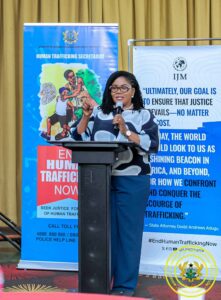
Discussions also focused on gender-sensitive approaches to victim support, as well as rehabilitation and reintegration strategies aimed at restoring dignity and providing sustainable livelihoods for survivors.
The workshop provided a platform for participants to deepen their understanding, exchange experiences, and strengthen inter-agency coordination, equipping them with practical knowledge and tools to enhance their roles in preventing and responding to human trafficking.