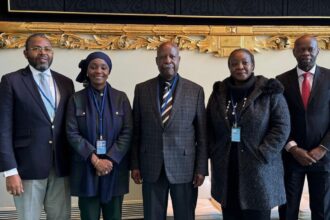

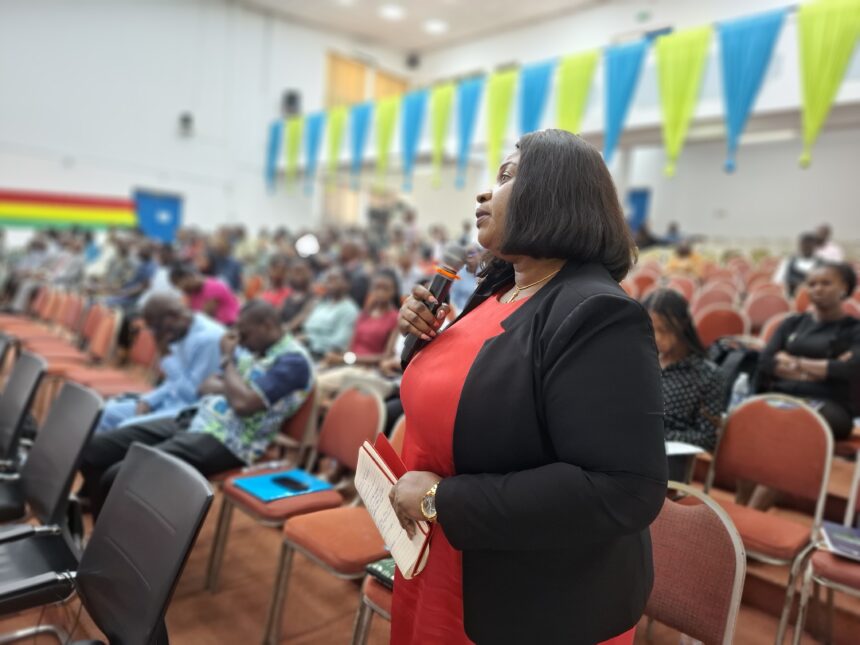
The Vice President of the Ghana Journalists Association, Rebecca Ekpe, joined policymakers, academics and civil society leaders at the launch of a major research report examining the state of Ghana’s democracy and how citizens perceive it.
 Rebecca Ekpe at GIMPA
The report, titled “Stocktaking of Ghana’s Democracy: Public Perceptions on Governance, Political Accountability, Democratic Values and Political Leadership in Ghana”, was jointly produced by the Konrad Adenauer Stiftung and the Ghana Institute of Management and Public Administration. It provides a comprehensive assessment of Ghana’s democratic journey, focusing particularly on voter behavior, political participation and public perceptions surrounding the country’s democratic processes.
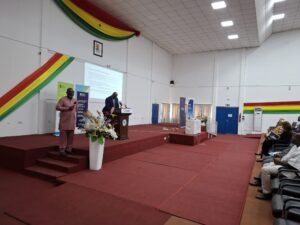
The launch event, held at GIMPA in Accra, brought together stakeholders from government institutions, political parties, academia, the media, and civil society to reflect on the evolving nature of Ghana’s democracy and the factors influencing citizens’ engagement in governance.
Speaking on the significance of the study, researchers noted that the nationwide survey sampled 16,988 respondents across all 276 constituencies in Ghana, providing a detailed and representative picture of how Ghanaians view democratic governance and electoral participation.
The findings reveal that Ghanaian voters are increasingly influenced by issues such as economic conditions, government performance and policy proposals rather than traditional loyalties such as ethnicity or religion. The report also highlights growing political awareness among citizens and an evolving electorate that is becoming more issue-driven in its voting decisions.
According to the study, many voters cited economic concerns—particularly the rising cost of living—as key factors shaping their choices during the 2024 general elections, reflecting the strong link between governance outcomes and electoral behaviour.
The research also sheds light on emerging challenges to democratic consolidation, including concerns about vote-buying and declining blind party loyalty. Analysts say these findings offer valuable insights for policymakers, researchers, journalists and civic organizations seeking to strengthen democratic accountability and citizen participation in Ghana.
For media practitioners such as Rebecca Ekpe, the launch served as an important platform to deepen engagement with evidence-based discussions on governance, democracy and the role of the media in shaping informed public discourse.
The study forms part of an ongoing series of publications aimed at tracking democratic trends in Ghana and promoting data-driven dialogue on the country’s political development and citizen participation in governance.