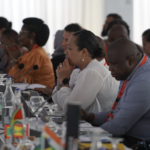

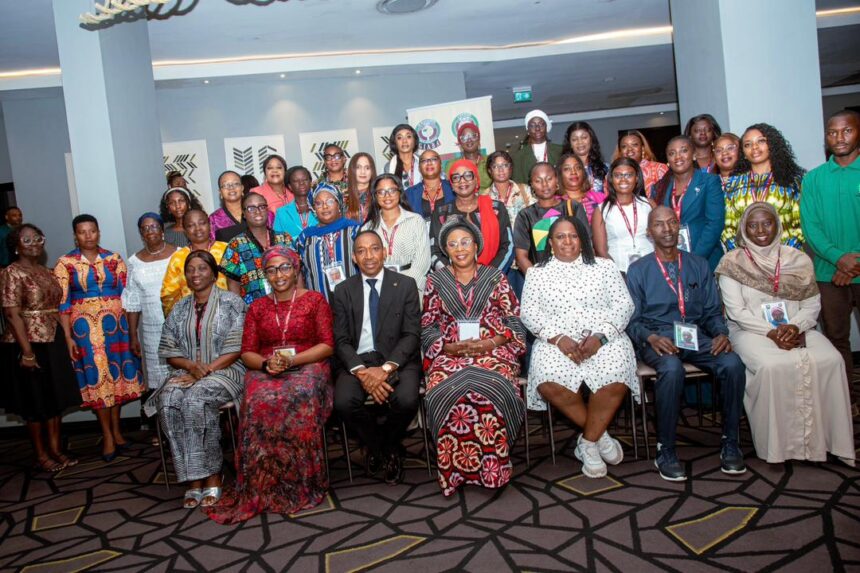
The Inter-Governmental Action Group against Money Laundering in West Africa (GIABA), in collaboration with the ECOWAS Gender Development Centre (EGDC), has officially opened a three-day Regional Forum on Women and Transnational Organized Crime: Human Trafficking Risks in West Africa. The forum, holding in Lagos, Nigeria from the 17th to 19th of December, 2025, brings together key stakeholders, law enforcement agencies, and financial intelligence units to address the growing complexities of human trafficking through a gender-responsive lens.
The opening session featured significant contributions from regional leaders, emphasizing the intersection of financial intelligence, gender equality, and security governance.
Delivering the welcome address on behalf of Ms. Hafsat Abubakar Bakari, the Director General of the Nigeria Financial Intelligence Unit (NFIU), Mrs. Biola Shotunde described the forum as a strategic necessity. Highlighting human trafficking has evolved into a sophisticated, financially motivated criminal enterprise generating over $150 billion annually. “Trafficking cannot be effectively tackled without integrating anti-money laundering and counter-financing tools“.
Representing Mrs. Binta L. Adamu Bello, OON, the Director-General of the National Agency for the Prohibition of Trafficking in Persons (NAPTIP), Mrs. Hajara Tunde-Osho, Assistant Director of Intelligence, emphasized that the engagement aligns with shared obligations under the United Nations Convention against Transnational Organized Crime. Tunde-Osho noted that traffickers are rapidly modifying their strategies, exploiting digital ecosystems and porous borders. She called for strengthened regional coordination and the leveraging of technology to address both traditional and emerging risks.
Delivering remarks on behalf of the Director General of GIABA, Dr Jeff Isima, GIABA’s Acting Director of Policy and Research provided sobering data to ground the deliberations. He noted that in West Africa, children make up more than 75% of trafficking victims. He identified poverty, gender inequality, and weak institutional capacity as primary precursors that traffickers exploit. He called for a strong regional coordination, political will, directing resources where they matter and clear accountability mechanisms in turning the tide.
Speaking on behalf of Her Excellency, Hajiya Imaan Sulaiman-Ibrahim, Nigeria’s Honorable Minister of Women Affairs and Social Development, Dr. Udeme Nsikak Abia underscored the critical link between human trafficking, money laundering, and terrorist financing as threats to collective peace and security. She reiterated Nigeria’s priority to integrate gender perspectives into security governance, ensuring that the experiences of survivors are central to sustainable solutions. She outlined three specific objectives guiding the forum: To discuss the money laundering and terrorist financing risks associated with women, focusing on human trafficking; create a platform for sharing good practices across ECOWAS member states on integrating gender perspectives into anti-trafficking programs: and to build a consensus on strategic mechanisms required to strengthen the fight against organized crime from a gender-responsive viewpoint.
She declared the forum open by reaffirming Nigeria’s commitment to ECOWAS frameworks that promote intelligence sharing and policy harmonization, urging participants to move beyond policy deliberation towards actionable solutions that protect the region’s most vulnerable populations.