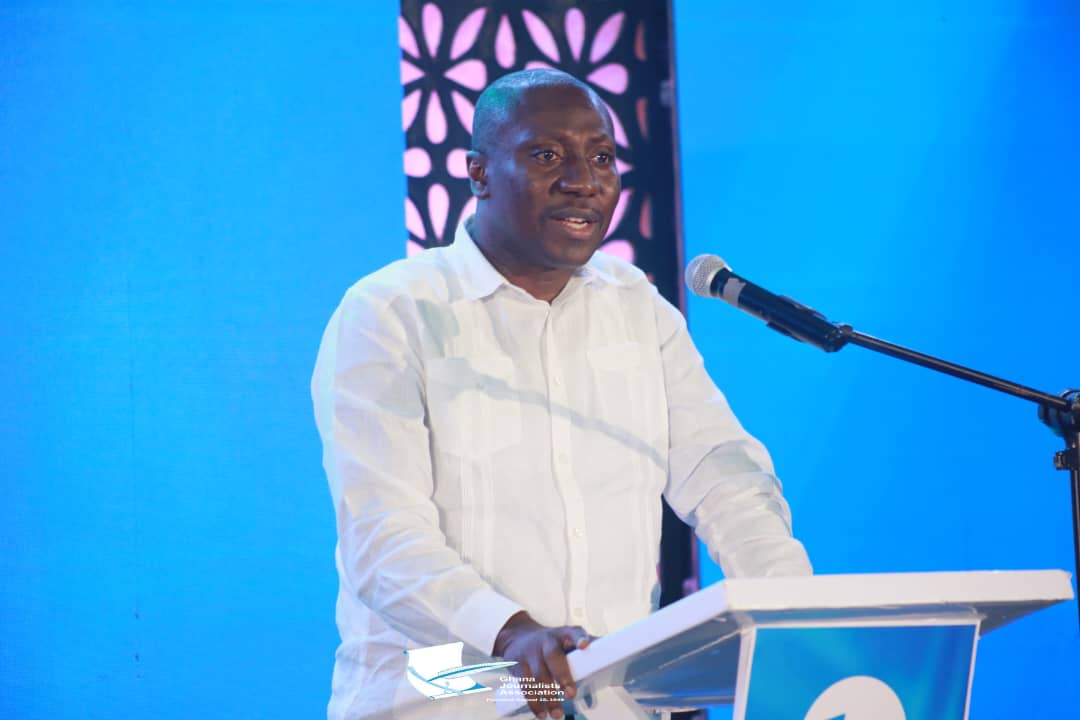

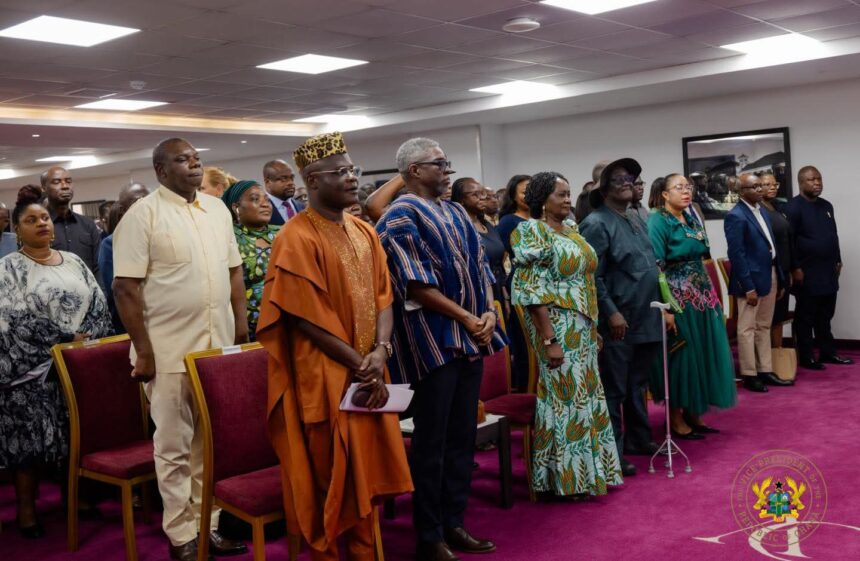
The Government of Ghana has opened the Second National Dialogue on Decentralisation and Responsive Governance, with a renewed call for stronger local institutions, greater accountability, adequate resources and meaningful citizen participation to accelerate development across the country.
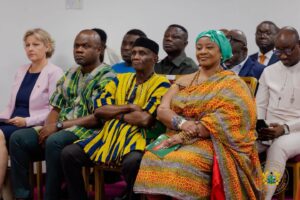
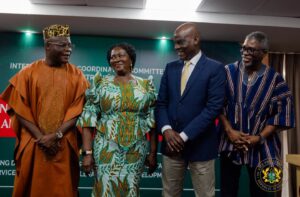
The dialogue, held to commemorate the Africa Day of Decentralisation and Local Development, is being held under the theme: “Resetting Democratic Decentralisation for Accountable Public Service Delivery and Accelerated Local Development.”
Vice President Professor Naana Jane Opoku-Agyemang, who officially opened the dialogue on behalf of President John Dramani Mahama, said the gathering provides an important opportunity for Ghana to assess the progress of decentralisation and determine the reforms required to make local governance more responsive to citizens.
She said decentralisation must remain focused on its fundamental objective of bringing government closer to the people and development closer to their doorsteps.
Exhibition highlights progress at local level
The Vice President commended stakeholders for an exhibition mounted alongside the dialogue, describing it as evidence of the considerable work being undertaken across Ghana’s Metropolitan, Municipal and District Assemblies.
She, however, called for the exhibition of physical infrastructure and other tangible achievements to be complemented by information on the less visible outcomes of decentralisation.
According to her, data on jobs created, tourism sites developed, agricultural opportunities, equipment supplied, human capital development, training and recruitment should also be captured and presented to give Ghanaians a more complete picture of local development.
She further suggested that such information should not be limited to physical exhibitions but should be communicated through film, electronic media and other digital platforms.
“We should also add the intangibles,” she stressed, noting that data could help demonstrate the impact of decentralisation across regions and sectors.
The call places emphasis on the importance of data-driven storytelling and evidence-based assessment of local development interventions.
National Decentralisation Policy provides roadmap
The Vice President said successive governments since the adoption of the 1992 Constitution have worked to translate Ghana’s constitutional commitment to decentralisation into functioning institutions and systems capable of delivering services to citizens through the MMDAs.
She cited the newly developed National Decentralisation Policy and Strategic Framework 2026–2030 (NDPS) as an important roadmap for the next phase of Ghana’s decentralisation reforms.
The policy seeks to:
- deepen democratic decentralisation;
- strengthen local governance institutions;
- improve public service delivery;
- accelerate development at the local level;
- empower local institutions;
- enhance citizen participation; and
- promote stronger partnerships across Ghana’s governance system.
Professor Opoku-Agyemang urged all stakeholders—including government institutions, Parliament, MMDAs, traditional authorities, development partners, civil society organisations, academia and citizens—to support the implementation of the policy.
She said support should include technical assistance, capacity development, financing, advocacy, innovation and active citizen participation.
Constitutional reforms to strengthen local governance
The Vice President also linked the decentralisation agenda to government’s Position Paper on the Constitutional Review recommendations, which she said presents an opportunity to undertake reforms aimed at strengthening local governance and accountability.
She identified several areas requiring attention, including the need to:
- consolidate Ghana’s decentralisation architecture;
- clarify the roles and responsibilities of local government institutions;
- strengthen the capacity of MMDAs;
- improve coordination between central and local governments; and
- establish governance systems capable of responding more effectively to citizens’ needs.
She stressed that decentralisation would only deliver its full benefits when local authorities have the necessary legitimacy, capacity, resources and institutional autonomy to perform their responsibilities.
Government re-energises decentralisation coordination
Professor Opoku-Agyemang outlined several measures already being undertaken by the Mahama administration to advance the decentralisation agenda.
She said government had re-energised the Inter-Ministerial Coordinating Committee on Decentralisation (IMCCD) to serve as an effective platform for coordinating national decentralisation reforms.
She also announced an increase in the proportion of the District Assemblies Common Fund transferred directly to MMDAs, providing local authorities with greater resources to undertake development programmes within their jurisdictions.
Government, she added, is advancing the necessary policy and legislative reforms to deepen functional devolution, particularly in the critical sectors of education, health and roads.
The reforms are intended to strengthen the ability of local institutions to make decisions and deliver services that respond to the specific needs of their communities.
Flooding and sanitation expose local governance challenges
A significant part of the Vice President’s address focused on environmental health and sanitation, particularly in the wake of recent flooding experienced in several parts of Ghana.
She described the flooding as a “sober reminder” of the consequences of weaknesses in waste management, sanitation practices and enforcement of environmental standards.
According to her, the challenges demonstrate that responsive local governance cannot be separated from the everyday environmental conditions in which citizens live.
She therefore called for stronger local leadership, greater accountability and sustained citizen participation in addressing sanitation and environmental health challenges.
Environmental health and sanitation to receive greater local attention
The Vice President disclosed that government is prioritising environmental health and sanitation within the decentralisation framework.
She said the proposed District Environment, Health and Sanitation Department under the National Decentralisation Policy and Strategic Framework is intended to restore operational responsibility for environmental health and sanitation to MMDAs.
The move, she explained, is expected to strengthen local accountability for sanitation—one of the most visible public services affecting citizens on a daily basis.
Government is also intensifying monthly clean-up exercises under the Clean Up Ghana campaign.
However, Professor Opoku-Agyemang cautioned that sanitation cannot depend solely on periodic clean-up exercises.
“Cleanliness must become a daily discipline,” she emphasised.
She disclosed that sanitation performance has been incorporated as a key performance indicator for Metropolitan, Municipal and District Chief Executives (MMDCEs).
Assemblies, she said, will therefore be expected to demonstrate measurable improvements in cleanliness and waste management within their jurisdictions.
Citizen participation central to decentralisation
The Vice President emphasised that decentralisation is ultimately about improving the lives of ordinary Ghanaians.
She said the goal is to build a Ghana in which local institutions have the confidence, capacity and resources to respond effectively to local needs, while communities become active partners in determining and implementing development priorities.
This, she noted, requires more than government action.
It requires sustained collaboration among central government, local authorities, traditional leaders, religious leaders, civil society, development partners, academia, the private sector and citizens.
A new phase for local development
The Second National Dialogue therefore provides a platform to examine how Ghana can move from decentralization as a constitutional principle to decentralization that produces measurable improvements in public services and community development.
The discussions are expected to reinforce the importance of accountable local governance, stronger institutional capacity, effective resource allocation and citizen participation.
The Vice President commended the Secretariat of the Inter-Ministerial Coordinating Committee on Decentralization for organising the platform and urged stakeholders to sustain their engagement beyond the dialogue.
She expressed confidence that continued collaboration could help Ghana achieve accountable public service delivery, stronger local economies and accelerated development across the country.
Professor Naana Jane Opoku-Agyemang subsequently declared the Second National Dialogue on Decentralization and Responsive Governance officially open, setting the stage for renewed national discussions on how to strengthen Ghana’s decentralization system and make local governance more responsive to the everyday needs of citizens.