
By Rebecca Ekpe
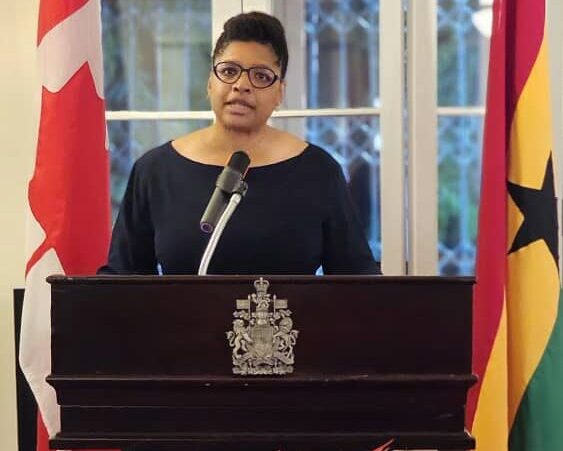
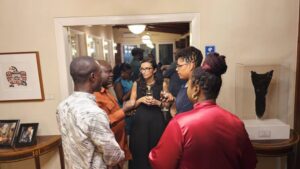
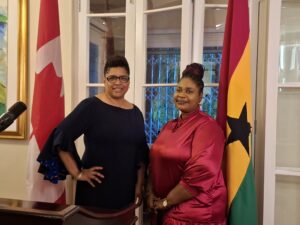
Through development cooperation, Canada has contributed to strengthening Ghana’s health systems, empowering women and girls, and fostering inclusive economic growth. At a reception with local media in Accra, on November 26, 2025, HE. Canadian High Commissioner to Ghana, Myriam Montrat, highlighted some of the gains and cooperation for mutual benefit of both countries.
On Trade and Investment, she said Canada would continue to ”work diligently to strengthen our partnership with Ghana by advocating for policies that promote a more investment- friendly environment”. This the Canadian High Commissioner said would be accomplished through collaboration with the government institutions, private sector stakeholders, and development partners.
Related Stories



FULL TEXT BELOW:
NOTES FOR AN ADDRESS BY
H.E. MYRIAM MONTRAT, HIGH COMMISSIONER OF CANADA TO GHANA
FOR A RECEPTION WITH LOCAL MEDIA
Colleagues from the media,
Distinguished guests,
Dear friends, ladies and gentlemen,
Bonsoir, good evening, and akwaaba.
It is a pleasure to welcome you to the official residence this evening –
Canada’s home in Ghana, and tonight, yours as well. Thank you for stepping
away from busy newsrooms, studios and digital platforms to be with us.
Let me begin with a simple truth: there is no strong democracy without a
strong, independent media. Ghana’s vibrant press, radio debates and digital
storytellers – all of you here – are central to the country’s democratic life.
This is why it is such an honour to host you here tonight.
I plan to take the opportunity to tell you about Canada’s bilateral relationship
with Ghana as well as our work and priorities here and how they fit in
Canada’s broader relationships with Africa and the world.
But my team and I are also here to listen to you. We know that Ghana’s
media landscape faces some challenges – from financial constraints and
concerns about safety, to polarization, misinformation and disinformation.
This evening, we wish to hear directly from you about these realities, and
about how Ghana’s media sector can be supported to remain strong,
resilient, independent, and responsible.
Canada was among the first countries to recognize Ghana’s independence in
1957, and we established our very first African bilateral development
program here shortly thereafter. Since then, we have kept a close friendship
with the people of Ghana. We have worked together in global forums to
advance our shared values, we have deployed peacekeepers to UN missions
together, and we also provided more than 2.5 billion dollars in development
assistance to Ghana, in support of priorities defined by Ghanaians
themselves.
Through development cooperation, we are strengthening Ghana’s health
systems, empowering women and girls, and fostering inclusive economic
growth:
• Through our Women’s Voice and Leadership project, Canada supported
Ghanaian women’s rights organisation that played a central role in
bringing about the Affirmative Action (Gender Equality) Law in 2024, and
we are supporting its implementation, including through assistance to
local-level governance institutions.
• In the health sector, Canada is one of Ghana’s top bilateral donors. For
example, we are supporting the roll-out of free primary health care,
including by helping strengthen the National Health Insurance Scheme.
In recent years, our support to the health sector has also helped around
4 million people – most of them women – gain access to and use
modern sexual and reproductive health services. About 2.5 million
adolescent girls benefit from nutrition programming that has
contributed to reducing anaemia from 48 percent in 2022 to 43 percent
in 2024.
• To foster inclusive economic growth, we are investing in youth
entrepreneurship, particularly for young women and men in
agribusiness and the green economy. Our partners are helping micro,
small and medium enterprises access finance, improve business skills
and connect to markets – including opportunities linked to the African
Continental Free Trade Area, whose Secretariat is right here in Accra.
• We are also very active in the Technical and Vocational Training sector,
working to address youth employment and ensure that training
matches industries’ needs so that young Ghanaian women and men are
prepared for the labour market. Canada has contributed CA$30M to the
TVET sector over the last seven years.
In this we are guided by our deep commitment for equality and equal
opportunities, and-by Ghana’s own vision.
Turning to trade and investment, Canadian companies are contributing
knowledge, technology and innovation to support Ghana’s sustainable
development of natural resources.
• Ghana is Canada’s fifth-largest bilateral trading partner in Sub-
Saharan Africa, and our eighth-largest trading partner on the continent
as a whole. Two-way merchandise trade reached about 483 million
dollars in 2024, with Canadian exports such as cereals and vehicles,
and imports including cocoa and soya beans. Canadian mining assets
in Ghana are valued at over 1.1 billion dollars, and we aim to build on
this strong foundation. Both Ghana and Canada possess rich deposits
of critical minerals and deep expertise in the mining sector, creating a
powerful basis for continued collaboration and growth.
• Through our Trade Commissioner Service, we help Canadian and
Ghanaian businesses connect in sectors such as clean technology,
infrastructure, information communication and technology,
sustainable mining and agri-food.
• We continues to work diligently to strengthen our partnership with
Ghana by advocating for policies that promote a more investment-
friendly environment. Through collaboration with government
institutions, private sector stakeholders, and development partners,
Canada supports initiatives that foster transparency, economic
stability, and innovation.
• Our efforts aim to create conditions that attract sustainable
investment, encourage entrepreneurship, and open new opportunities
for trade and growth within Ghana’s dynamic economy.
And through diplomacy and security cooperation, we are working together
with Ghana to promote peace and security, gender equality, democracy,
human rights, and regional stability.
• We are especially proud of our collaboration with the Ghana Armed
Forces through the Elsie Initiative, advancing the meaningful
participation of women in UN peace operations – a cause where
Ghana’s leadership shines on the global stage.
• Through foreign policy programming, including the Canada Fund for
Local Initiatives, we support organisations that promote inclusive
governance, human rights and conflict prevention – including
community radio projects countering hate speech, NGOs preparing
women to run for office, and youth groups mediating local disputes.
• Additionally, our long-standing military relationship continues to grow
through Canada’s Defence Military Training and Cooperation Program.
• And our border security cooperation – including joint work by Ghanaian
border agencies and the Canada Border Services Agency – supports
Ghana’s role as an anchor of stability, helps combat trafficking and
smuggling, and facilitates legitimate trade and travel. These efforts
support Ghana’s role as an anchor of stability in a region facing
complex security threats.
Meanwhile, Ghanaians have also made important contributions to Canada
and become part of Canadian society’s fabric and culture. The Ghanaian
community in Canada is now estimated at over 100,000 people, some of
them having become influential academics, entrepreneurs, activists,
sportspeople, or artists. Likewise, many Canadians live, study, work and
invest here in Ghana. In other words, families, businesses, research
partnerships and friendships are being built by our two nations across the
Atlantic.
The High Commission of Canada relies on these bridges to continue
advancing mutual prosperity, strengthening democratic institutions, and
supporting innovation.
But we find ourselves in a world of profound change. The challenges we face
– from economic uncertainty to global instability – are real. To step up to
these challenges and ensure we remain a strong, dynamic and secure
country, Canada is refocusing its foreign policy on two main priorities: trade
diversification, and peace & security partnerships.
In Africa, this is supported by a new Africa Strategy launched earlier this year,
titled A Partnership for Prosperity and Shared Security. It aims to enhance
security cooperation and commercial ties that benefit Canadians and
Africans alike, founded on peer-to-peer partnership and strong people-to-
people tie.
So, what does this mean for Canada’s work and priorities in Ghana? It means
that we will continue to support inclusive, sustainable economic growth –
especially for women and youth – by backing Ghanaian entrepreneurs,
supporting green and digital transitions, and creating space for Canadian
and Ghanaian businesses to partner in ways that create decent work on both
sides of the Atlantic.
It also means that we will remain a partner for Ghanaian institutions and civil
society working to strengthen democracy, uphold human rights – including
women’s rights – and ensure that no one is left behind, while building on
Ghana’s role as a regional pillar of peace and stability through defence and
security collaboration, the Elsie Initiative, and support for strong,
accountable security institutions.
And finally, it means that we will keep strengthening those people-to-people
ties – through education, culture, tourism and, of course, through the stories
that you in the media choose to tell.
In this spirit, my team and myself here at the High Commission are working
hard to give Canadian and Ghanaian citizens, institutions, students, and
businesses the tools to expand and deepen their partnerships and
exchanges. Last week we celebrated a major success in this regard, when Air
Transat, one of Canada’s major airlines, announced the launch of a new
non-stop route between Toronto and Accra. This will be a seasonal service
that offers two weekly flights between June 17 to October 22, 2026.
This first-ever direct air link between Canada and Ghana will help bring our
two countries even closer together by making tourism, business travel, and
educational and cultural exchanges in both directions much more
convenient, just in time for the FIFA World Cup 2026. And this is just the
beginning, as the Air Transport Agreement (ATA) signed between Canada and
Ghana in March 2025 allows for up to 14 weekly passenger flights and 10
weekly cargo flights by multiple carriers.
As Canada co-hosts the FIFA World Cup 2026 alongside Mexico and the
United States – with matches in Toronto and Vancouver – we see sport as
another bridge between our societies and a driver of cultural tourism. Many
Ghanaian fans will be cheering for the Black Stars on North American soil,
and Canada will welcome them – proud of our diversity, and ready to share
our cities, our culture and our love of the beautiful game.
Let me end with a word of appreciation to you.
You are not just observers of the Canada-Ghana partnership; you are part of
it. Ghana’s media landscape is a cornerstone of this country’s democracy
and an essential partner for all of us who care about transparency,
accountability and informed public debate. We would like to work more with
you – to share information about our programs, to connect you with
Ghanaian and Canadian voices who are doing important work on the ground,
and to help ensure that Ghanaians see themselves in the stories of our
cooperation.
At the same time, we are keen to understand better the challenges you face:
how you sustain quality journalism, how you protect the safety of journalists,
how you navigate regulation, political pressure and the demands of the
digital marketplace.
I hope tonight’s reception will give you the opportunity to share those
insights with us, frankly and directly, and to suggest where partners like
Canada can best add value.
On that note, let me simply say: thank you for your partnership, for your
scrutiny and for your storytelling.
Medaase. Thank you, and please enjoy the evening.