
FULL TEXT:
Delivery of Decision by the African Court on Human and Peoples’ Rights
(African Commission on Human and Peoples’ Rights v Republic of Kenya)
Related Stories
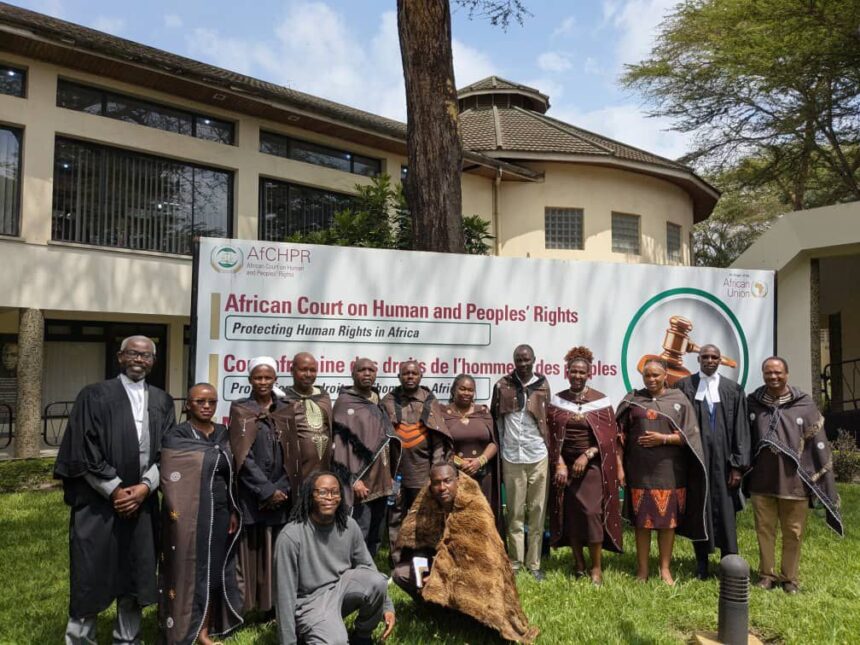
ARUSHA, TANZANIA – On 4 December 2025, the African Court on Human and Peoples’ Rights
(the African Court) delivered its Decision on Application No. 006 of 2012 (African Commission
on Human and Peoples’ Rights v Republic of Kenya), following the compliance hearing held
on 6 June 2025, which assessed the Respondent’s progress in implementing the Court’s
Judgement, of 26 May 2017 on the Merits and of 23 June 2022 on Reparations.
The Applicant was represented in Court by the Pan African Lawyers Union (PALU), with
Advocate Donald Deya. Also joining online was Hon. Dr. Solomon Ayele Dersso, the
Commissioner of the African Commission that is in charge of this case.
KEY FINDINGS IN THE DECISION ON COMPLIANCE:
The African Court made the following findings and relevant orders to the Respondent:
Finds that it has jurisdiction to assess and determine the Respondent State’s level of
compliance with its previous decisions within the stipulated timeframes and further
affirms that a State cannot invoke domestic laws to justify non-compliance with
international obligations under the African Charter and the Protocol establishing the
Court.
Finds that the Respondent (Republic of Kenya) has not fully complied with the
Court’s Judgments on the Merits (26 May 2017) and on Reparations (23 June 2022),
particularly in relation to the recognition of the Ogiek as an Indigenous people, the
protection of their ancestral lands, and the publication of the Court’s judgments as
previously ordered. Finds that the Respondent’s continued non-implementation of
the Court’s Judgments and Orders constitutes a violation of Articles 1 and 27 of the
Protocol establishing the Court.
iii.
Orders the Respondent to immediately take all necessary legislative, administrative,
or other measures to fully remedy the violations previously established, including:
- identifying, delimiting, demarcating and titling Ogiek ancestral land in
consultation with the Ogiek and/or their representatives, and issuing a
collective title to such land;2
- initiating processes to resolve disputes and claims involving Ogiek ancestral
land currently occupied by third parties;
- guaranteeing full and effective recognition of the Ogiek as an Indigenous
people of Kenya, including recognition of their language, cultural, and religious
practices;
- ensuring the Ogiek are effectively consulted, in accordance with their
traditions and customs, regarding all development, conservation, or
investment projects on their ancestral land; and
- guaranteeing the full consultation and participation of the Ogiek community
in the implementation of all reparation measures.
Orders the Respondent to desist immediately from any conduct, action, or omission
that undermines or frustrates the implementation of the Court’s prior Judgments and
Orders in this matter.
Orders the Respondent to adopt immediate measures to guarantee non-repetition,
including all necessary legislative, administrative or other steps to give full effect to
the Court’s Judgments and prevent recurrence of the violations identified.
Orders the Respondent to immediately pay the outstanding reparations previously
awarded, namely USD 57,850 for material prejudice and KES 100 million for moral
prejudice suffered by the Ogiek community.
vii.
Orders the Respondent to establish the Ogiek Community Development Fund, and
to operationalise the Committee responsible for managing this Fund, as previously
ordered in the Reparations Judgment.
viii.
Orders the Respondent to publish, within six (6) months, the official summaries of the
Merits and Reparations Judgments in the Government Gazette and a newspaper of
national circulation, and to publish the full judgments together with their summaries
on an official government website for at least one year; and to submit to the Court,
within six (6) months, a clear and detailed report on the status of implementation of
all outstanding orders issued in this matter.
PALUS’ RESPONSE TO THE DECISION:
PALU continues to be an advocate for good governance and rule of law, but most especially
the defence and protection of all human and peoples’ rights for all Africans and every person 3
resident in Africa. PALU is pleased with the Decision delivered by the African Court and
commits to assist the Government of Kenya to fully comply with it, as part of its commitment
as an African Union Member State.
COMMENTS/STATEMENTS/REMARKS:
Adv. Donald Deya, PALU’s CEO: “This is yet another reaffirmation of the Ogiek community’s
long-standing call for the complete enforcement of the Court’s decisions and the protection
of its land, culture, and fundamental human rights. The Government of Kenya needs to stop
any further delay tactics and take all necessary measures to recognise fully and effectively the
Ogiek community’s collective rights to their ancestral lands within the Mau Forest.”
BACKGROUND OF CASE:
The case is in respect of the Ogiek community in Kenya. The Ogiek are an indigenous minority
ethnic group in Kenya comprising about 20,000 members, of whom about 15,000 inhabit the
greater Mau Forest complex, a landmass of about 400,000 hectares straddling about seven
administrative districts. In October 2009, through the Kenya Forestry Service, the Kenyan
Government issued a thirty (30) day eviction notice to the Ogiek and other settlers of the Mau
Forest, demanding that they move out of the forest on the grounds that the forest constituted
a reserved water catchment zone, and was, in any event, part and parcel of government land
under Section 4 of the Government Lands Act. The Government contends that this decision is
informed by the State’s attempt to conserve the forest, which is a water catchment area.
In its Application, the Applicant prays to the Court to Order the Respondent to:
1) Halt the eviction of the Ogiek from the East Mau Forest and refrain from harassing,
intimidating, or interfering with the community’s traditional livelihoods;
2) Recognise the Ogiek’s historic land, and issue it with a legal title that is preceded by
consultative demarcation of the land by the Government and Ogiek Community, and
for the Respondent to revise its laws to accommodate communal ownership of
property; and
3) Pay compensation to the community for all the loss they have suffered through the
loss of their property, development, natural resources and also freedom to practice
their religion and culture.
The Applicant subsequently requested the Court to issue provisional measures on the ground
that, on 9 November 2012, the Ministry of Lands of the Respondent issued a directive that
restrictions on transactions for land measuring five acres or less within the Mau Forest
Complex Area be lifted, which the Court granted during its 28th Ordinary Session when it
ordered provisional measures as follows:4
- The Respondent immediately reinstates the restrictions it had imposed on land
transactions in the Mau Forest Complex and refrains from any act or thing that would
or might irreparably prejudice the main Application before the Court, until the final
determination of the said Application.
- The Respondent reports to the Court within a period of fifteen (15) days from the date
of receipt hereof, on the measures taken to implement this Order.
In its Judgement on the Merits on 26 May 2017, the Court:
- Declared that the Respondent has violated Articles 1, 2, 8, 14, 17(2) and (3), 21 and 22
of the Charter;
- Declared that the Respondent has not violated Article 4 of the Charter;
iii. Ordered the Respondent to take all appropriate measures within a reasonable time
frame to remedy all the violations established and to inform the Court of the measures
taken within six (6) months from the date of the Merits Judgement;
- Reserved its Ruling on Reparations.
In its Judgement on Reparations, on 23 June 2023, the Court, amongst others:
- Ordered the Respondent to pay pecuniary reparations;
- Ordered the Respondent State to take all necessary measures, legislative,
administrative or otherwise to identify, in consultation with the Ogiek and/or their
representatives, and delimit, demarcate and title Ogiek ancestral land and to grant
collective title to such land in order to ensure, with legal certainty, the Ogiek’s use and
enjoyment of the same.
iii. Ordered the Respondent State, where concessions and/or leases have been granted
over Ogiek ancestral land, to commence dialogue and consultations between the
Ogiek and their representatives and the other concerned parties for purposes of
reaching an agreement on whether or not they can be allowed to continue their
operations by way of lease and/or royalty and/ or benefit sharing with the Ogiek in
line with all applicable laws. Where it proves impossible to reach a compromise, the
Respondent State is ordered to compensate the concerned third parties and return
such land to the Ogiek;
- Ordered that the Respondent State must take all appropriate measures, within one
(1) year, to guarantee full recognition of the Ogiek as an indigenous people of Kenya
in an effective manner, including but not limited to, according full recognition to the
Ogiek language and Ogiek cultural and religious practices;
- Ordered the Respondent State to ensure the full consultation and participation of the
Ogiek, in accordance with their traditions/customs, in the reparation process as
ordered in this judgment.5
On 12 November 2024, the Court convened a public hearing, under Rule 81 of the Rules of
Court, as read with part xv of the operative part of its Judgment on Reparations of 23 June
- During the hearing, the Court Granted the Respondent State a period of 90 days,
commencing from 12 November 2024, to file its Report on the steps taken to implement the
Court’s decisions in this Application on the merits as well as on reparations. The said Report
was to be filed no later than 11 February 2025.
This request was granted after the Respondent State acknowledged that it has not fully
complied with the Court’s rulings, specifically citing delays in publishing and gazetting the
official summaries of both the merits and reparations judgments. The Respondent also
expressed its commitment to undertaking the necessary steps toward full implementation.
NOTES TO EDITORS:
The Pan African Lawyers Union (PALU) is the premier continental membership forum of and
for individual African lawyers and lawyers’ associations in Africa. It was founded in 2002 by
African Bar leaders and eminent lawyers, to reflect the aspirations and concerns of the African
people and to promote and defend their shared interests. Its membership comprises of the
continent’s over five regional lawyers’ associations, over 54 national lawyers’ associations and
over 1,000 individual lawyers spread across Africa and in the Diaspora.
ISSUED BY:
Pan African Lawyers Union (PALU)
Arusha, Tanzania
+255 685 078 794
www.lawyersofafrica.org.