
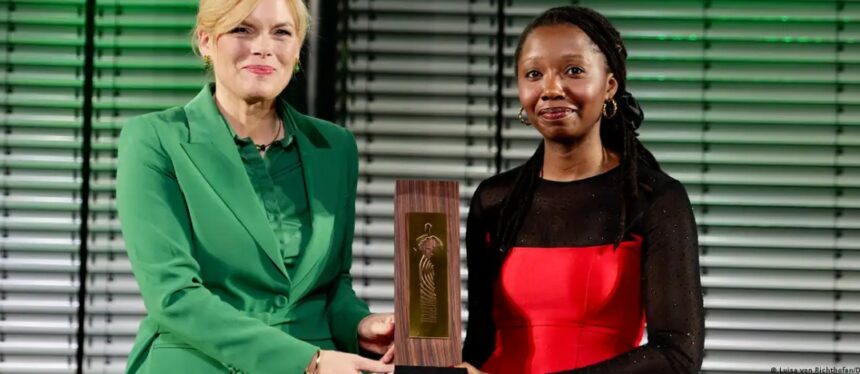
Zimbabwean activist Namatai Kwekweza has won this year’s German Africa Prize.
A select audience gathered on Wednesday in Berlin to honor the 26-year-old women’s and youth activist.
The 20-member independent jury said Kwekweza offers a “resounding message of confidence and democratic renewal.”
Related Stories

The jury selected Kwekweza from more than two dozen nominees in the final round.
In her ceremonial address, Bundestag President Julia Klöckner praised Kwekweza for trailblazing democracy and the rule of law in her home country.
“You, dear Namatai, are taking the space that is rightfully yours, even if the government does not intend one for you,” Klöckner said.
Politics and society both in Zimbabwe and beyond need women like Kwekweza, Klöckner maintained, sharing the hope that this award and its message would resonate back in the activist’s home country.
The embassy of Zimbabwe was absent from Wednesday evening’s ceremony. “But I do believe they will certainly have noticed,” Klöckner said.
Who is Namatai Kwekweza?
At the age of 18, Namatai Kwekweza founded the WELEAD Trust, an organization that trains young leaders and works to involve them in political decision-making processes.
In the increasingly repressive climate in Zimbabwe, she fights for the rule of law and political participation. Kwekweza has risked a lot for this: She has been arrested several times and has reported torture and intimidation attempts. Every achievement has its price, said Kwekweza.
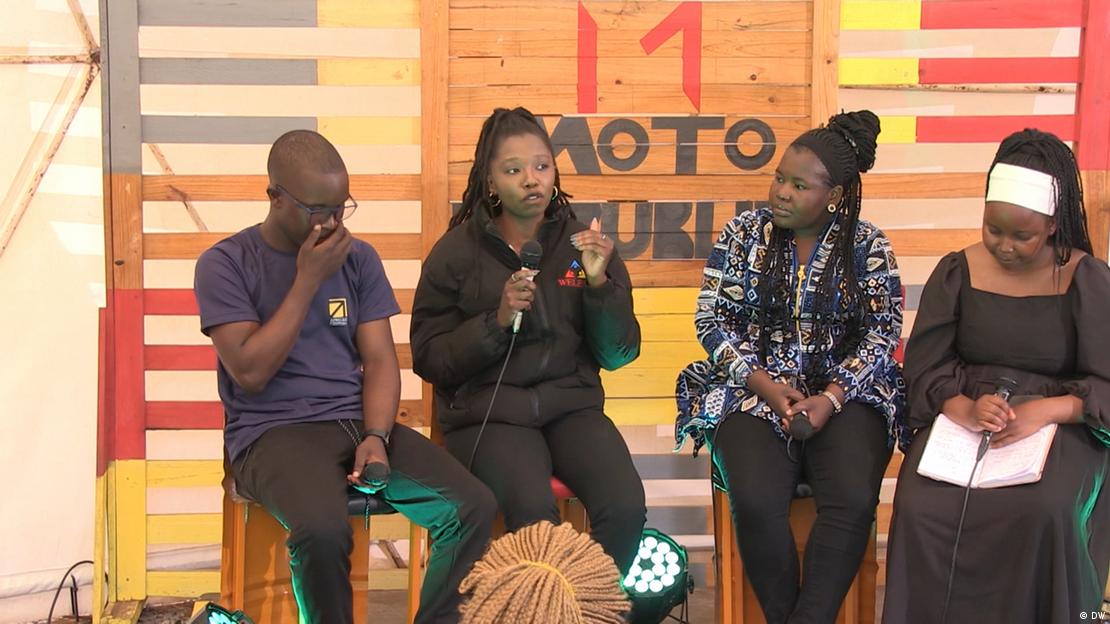
“At the end of the day, we have to choose our hard,” Kwekweza told DW.
“If you’re abducted for speaking truth to power, if you’re in prison for speaking truth to power, it’s hard. But if you’re waking up and you’re living a life, a shell of a life that is limited in opportunity and possibility, that is also hard.”
When asked how she felt after receiving the prestigious award, Kwekweza praised her community and the team at WELEAD Africa behind her.
“I consider myself privileged that I get to go to all these boogie places, because many of my peers don’t,” Kwekweza reflected, adding: “My mother considers herself privileged that I get to go home after work in one piece, and not in a coffin.”
Kwekweza dedicated her award “to all the young people who stand up to power and who pay a hefty price for that.”
Jury chair Claus Stäcker, Director Programs for Africa at DW, explained that recent momentum in youth activism in Africa had played a role in the jury’s decision.
“Young people across the continent are campaigning for a say in decision-making, transparency, and social change, as demonstrated by the protest movements of Generation Z in countries like Kenya, Madagascar, Tanzania and Cameroon,” Stäcker said.
Credit: DW