
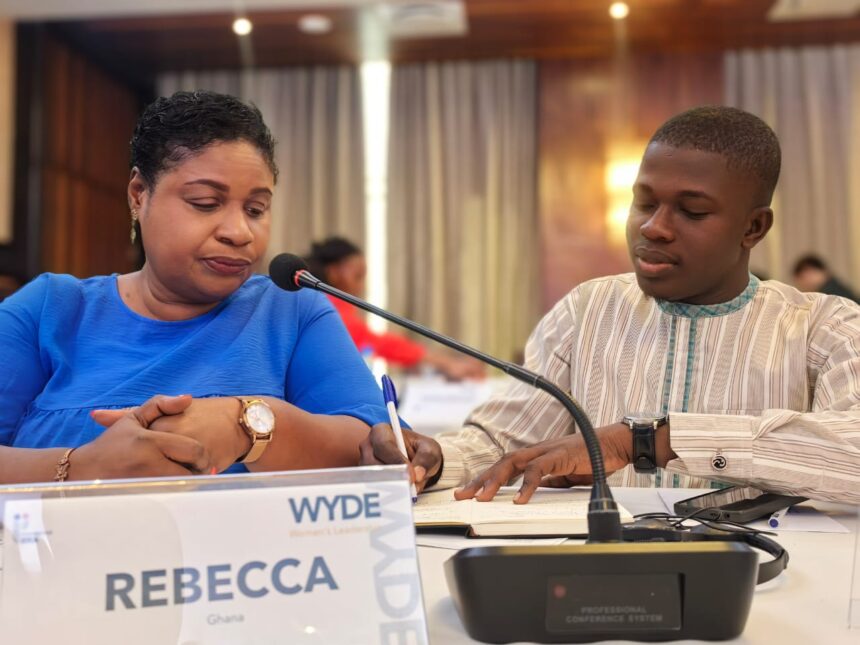
Ghanaian journalist and media leader, Rebecca Ekpe, has called on women and young people to recognize the power of their voices and use them strategically to challenge injustice, influence decision-making and drive positive social change.
She said voices, particularly those of women and marginalized groups, remained critical instruments for promoting accountability, strengthening democratic participation and transforming societies.
Speaking at the Inter-Regional Dialogue on Advancing the Transformation of Gender Social Norms to Enhance Women’s and Youth Participation and Representation in Leadership and Decision-Making in Zanzibar, Tanzania, Rebecca Ekpe emphasized that having a voice was not merely about speaking but making meaningful contributions that could influence attitudes, policies and outcomes.
Related Stories

According to her, a voice could challenge injustice, question authority, defend vulnerable populations, inspire hope and give visibility to individuals and communities whose experiences were often overlooked.
She urged women not to allow fear, intimidation, societal expectations or the possibility of criticism to prevent them from expressing their views and participating actively in leadership processes.
“Your voice matters, even when it shakes. It matters even when you stand alone. It matters even when not everyone agrees with what you have to say,” she stressed.
Voice must come with responsibility
The Ghanaian media leader noted that while the freedom to speak was important, individuals must recognise the responsibility that came with using their voices.
She explained that effective communication and leadership required speaking truthfully, courageously, wisely and with purpose rather than simply seeking attention or speaking loudly.
She encouraged participants to use their influence to empower others, promote education, encourage constructive conversations and create platforms for people whose voices were often excluded from public discussions.
Ekpe further observed that the true measure of influence was not necessarily the number of people listening to an individual but the positive difference that person’s contribution made in the lives of others.
“Never use your voice to diminish others. Use it to empower, educate, encourage and create opportunities for others to be heard,” she advised.
Women must move beyond representation to influence
Addressing the broader question of women’s participation and representation in leadership and decision-making, Ekpe stressed that women’s inclusion must go beyond merely occupying positions or being present at decision-making tables.
She said women must have the confidence, institutional support and opportunities to express their views, shape conversations and influence decisions affecting their communities and societies.
She also called for deliberate efforts to amplify women’s voices, particularly in the media, governance, public policy and other spaces where important decisions were made.
Her remarks highlighted the media’s responsibility in shaping narratives about women, challenging harmful gender stereotypes and ensuring that women’s experiences, expertise and contributions received adequate visibility.
One voice can change a narrative
Reflecting on the significance of individual voices in driving transformation, Ekpe maintained that one courageous voice could inspire a movement, challenge an established narrative, influence policy or transform a life.
She urged women, particularly emerging female leaders and young professionals, not to silence themselves to make others comfortable or underestimate the value of their perspectives.
“Speak up. Speak out. Speak with purpose. And when you have the opportunity, use your voice to amplify the voices of others,” she encouraged.
The dialogue in Zanzibar brought together stakeholders to examine ways of transforming gender social norms and strengthening women’s and young people’s participation and representation in leadership and decision-making.
Ekpe’s intervention reinforced the importance of voice, visibility and influence as essential elements in advancing gender equality and building more inclusive leadership structures.

Her central message was clear: women must not only be given a seat at the table; they must also have the voice, confidence and power to shape the conversations and decisions taking place around it.
********************************************************************************************************************
Rebecca Ekpe is a journalist and media leader, Vice President of the Ghana Journalists Association (GJA), and an advocate for gender equality, media development and the advancement of women in journalism and leadership.