
By Rebecca Ekpe
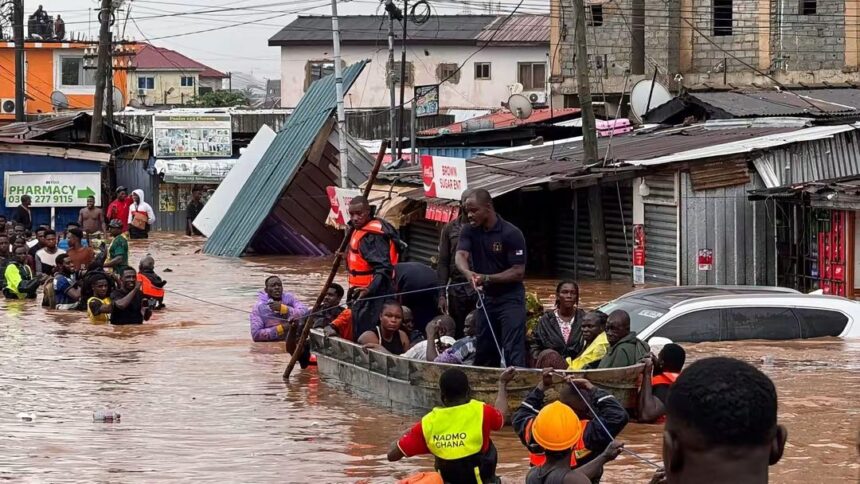
Heavy rains that battered parts of Accra have once again exposed the capital’s persistent drainage and sanitation challenges, leaving several communities flooded, disrupting traffic, damaging property, and forcing residents to count their losses.
Areas known to be flood-prone experienced significant flooding after hours of torrential rainfall, with roads becoming impassable and some homes and businesses inundated. Emergency responders and city authorities were deployed to assess the situation and assist affected residents.
 Flooding in Accra, Ghana.
The latest flooding has reignited concerns over the recurring factors that continue to worsen the impact of heavy rains in the capital. For years, government officials, environmental experts, and city authorities have pointed to indiscriminate waste disposal, the dumping of refuse into drains, the construction of unauthorised structures on waterways and wetlands, and poor maintenance of drainage systems as major contributors to urban flooding.
Despite repeated public education campaigns, many drains remain clogged with plastic waste, household refuse, and debris, restricting the free flow of stormwater during heavy rains. The situation is further compounded by illegal developments that obstruct natural watercourses, forcing floodwaters into residential communities.
President John Dramani Mahama has repeatedly stressed that addressing flooding requires both government intervention and public responsibility. He has urged Ghanaians to desist from littering, respect planning regulations, and support efforts to keep drains clean, emphasizing that sanitation is a shared national responsibility.
The President has also underscored the need for stronger enforcement of environmental and building regulations, warning that the continued encroachment on waterways and wetlands undermines investments in flood-control infrastructure and puts lives at risk.
Local government authorities have echoed these concerns, noting that while drainage expansion and desilting exercises continue across parts of Accra, the effectiveness of these interventions is often undermined by human activities. Officials have called for stricter enforcement against illegal structures, intensified public education, and greater community participation in maintaining clean surroundings.
Environmental advocates say the recurring floods should serve as a reminder that climate change is increasing the frequency and intensity of extreme weather events, making resilient urban planning and responsible environmental practices more important than ever.
As the rainy season continues, authorities are urging residents to avoid building on waterways, refrain from dumping refuse into drains, heed weather advisories, and relocate from flood-prone areas whenever necessary. They maintain that reducing the devastating effects of flooding will require sustained investment in infrastructure, strict enforcement of planning laws, and a collective commitment by citizens to protect the environment.
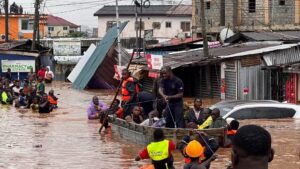
The latest incident serves as yet another reminder that while heavy rainfall is a natural occurrence, the scale of destruction is often amplified by preventable human actions. Until sanitation challenges, illegal developments, and poor environmental practices are effectively addressed, Accra is likely to remain vulnerable to flooding whenever torrential rains occur.
Photos: Woezor TV